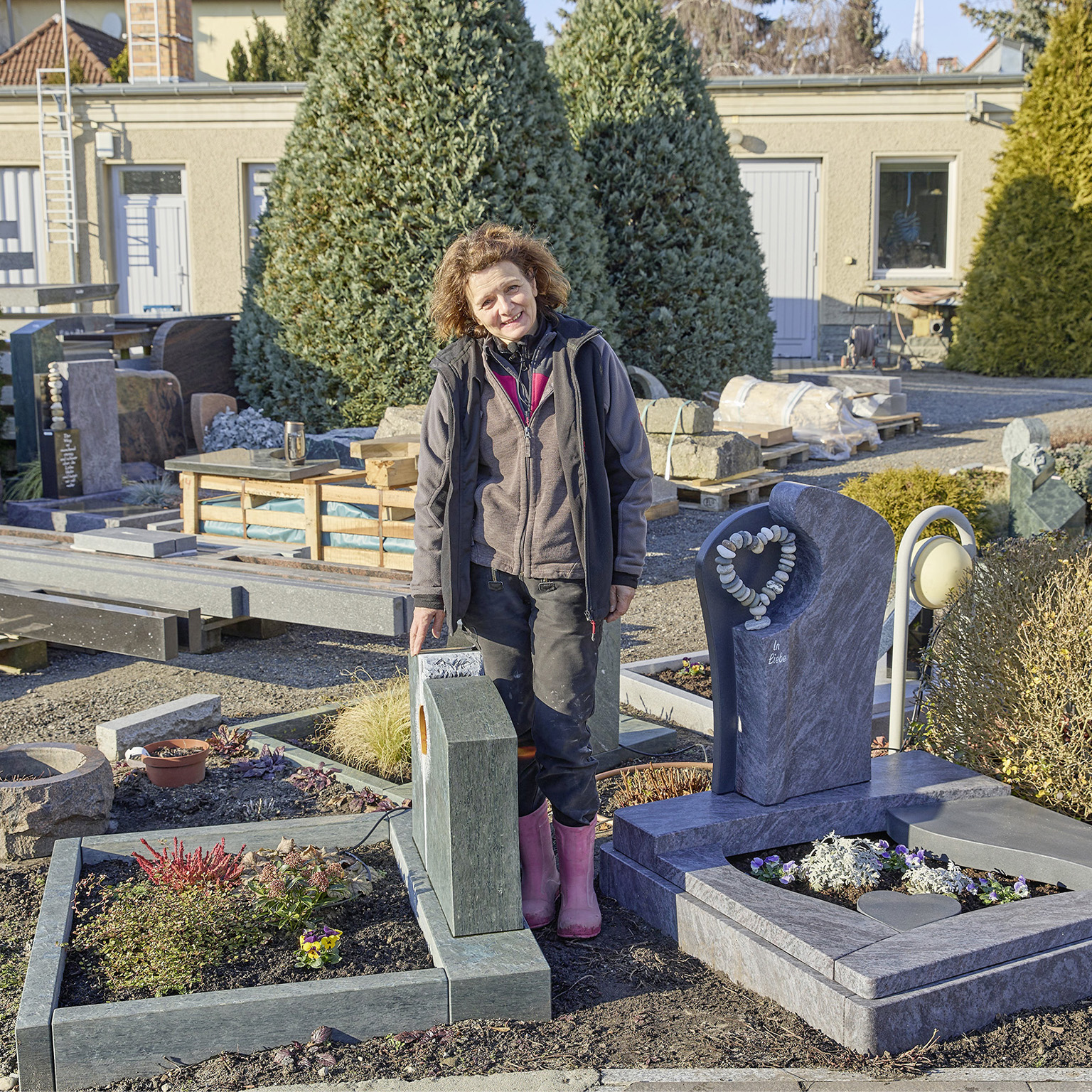
Karin Grobe relies on innovation and in-house production when it comes to gravestones. In her exhibition in Zossen, Brandenburg, she presents an extensive range. Regional German materials play a large part in this.

Karin Grobe relies on innovation and in-house production when it comes to gravestones. In her exhibition in Zossen, Brandenburg, she presents an extensive range. Regional German materials play a large part in this.

Steinmetzbetrieb Grobe

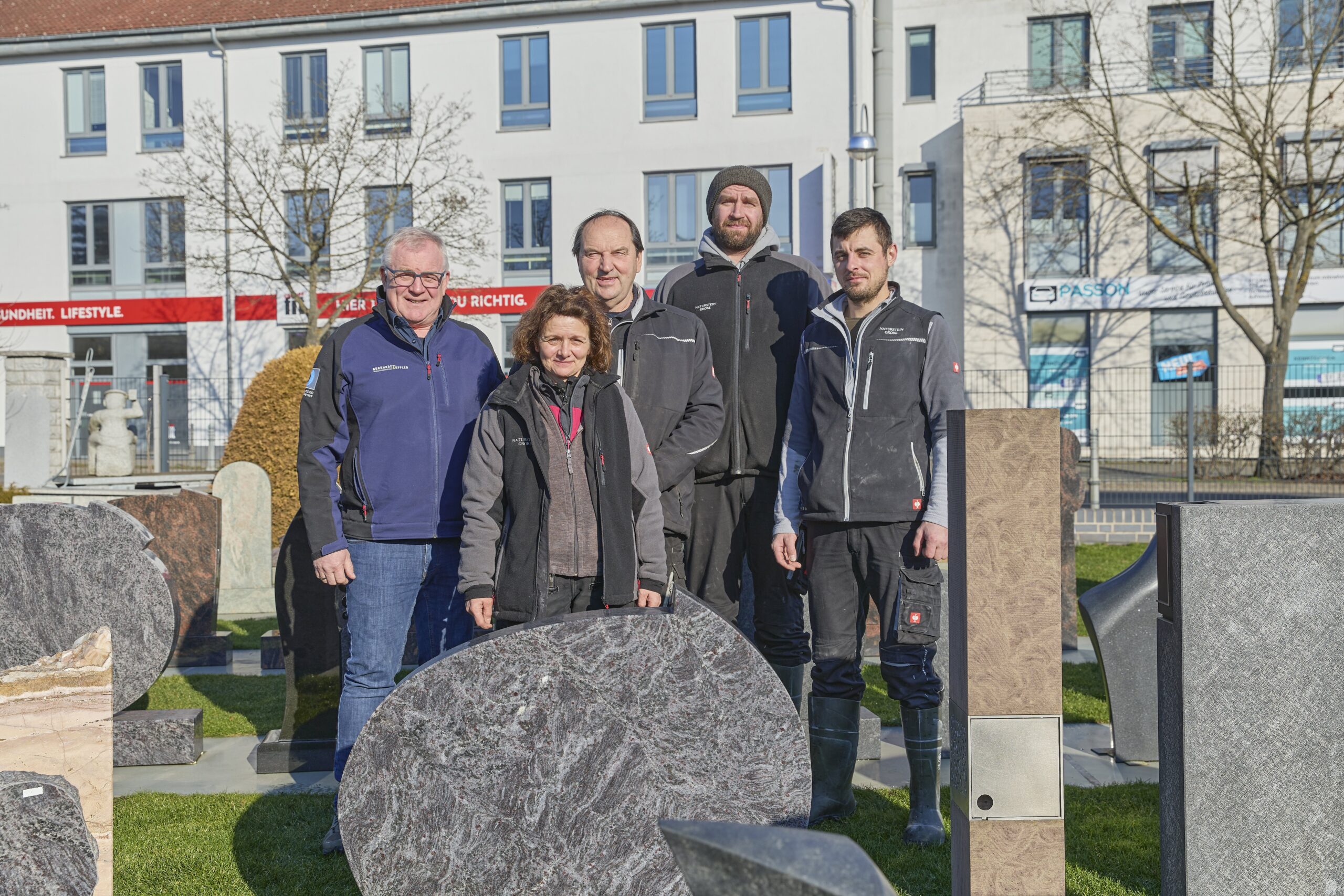
Karin Grobe relies on in-house production. The master stonemason has completely revamped her workshop in Zossen, Brandenburg, and invested in state-of-the-art machine technology.

Customer
Grobe
Country
Germany
Machines
LDZ 2000,
KSL 80,
FSA 567

Running a successful craft business today requires foresight above all else. Karin Grobe recognized this early on: even during her school years, she was passionate about sculpture.Starting in the seventh grade, her parents regularly took her to Potsdam after school, where she attended a modeling workshop—a kind of recreational course similar to a community college program. Her search for an apprenticeship, however, began with a rejection: „I initially wanted to become a stonemason in Dresden and later train as a sculptor, but a large company turned me down because they had no sanitary facilities for female apprentices.“ Today, gender equality is a major topic, but at that time, women were still rejected for such reasons, Karin Grobe recalls.Since she couldn’t find another apprenticeship, she began training with her father, Reiner Grobe. By her second year as an apprentice stonemason, she was already producing sculptural works such as compass point markings and plastic reliefs. After passing her journeyman’s examination, she laid the foundation for her career with a master craftsman’s certificate in sculpture in 1993 in Königslutter and fully joined the family business.

Investing in Modern Machinery

The company, founded in 1928, has been family-run for three generations. In 2004, the master stonemason and sculptor took over the business from her father. With gravestones accounting for 65% of sales, they remain the company’s mainstay, followed by 30% from the construction sector. A particular strength of the business is its high degree of in-house production: three out of four gravestones or memorial installations come from its own workshop. To ensure maximum creative freedom, Karin Grobe and her two employees work directly from the raw stone. To modernize the entire production process, she made substantial investments in state-of-the-art machinery from Burkhardt-Löffler.The first major upgrades began in 2021 with a 5-axis CNC bridge saw LDZ 2000, featuring automatic tool changes and vacuum lifting, as well as an edge grinding machine KSL
80. In 2024, the latest addition followed: a surface grinding machine FSA 561. The decision to partner with Burkhardt-Löffler was not made overnight but was based on a long-standing collaboration. The predecessor of the current edge grinding machine was also a KSL 80—at that time still produced by Löffler—which the engineers from Langenaltheim custom-fitted into the workshop in 1998. Positive experiences with service and spare parts supply—even overnight when needed—made the decision to invest in further Burkhardt-Löffler machines an easy one, Grobe explains.

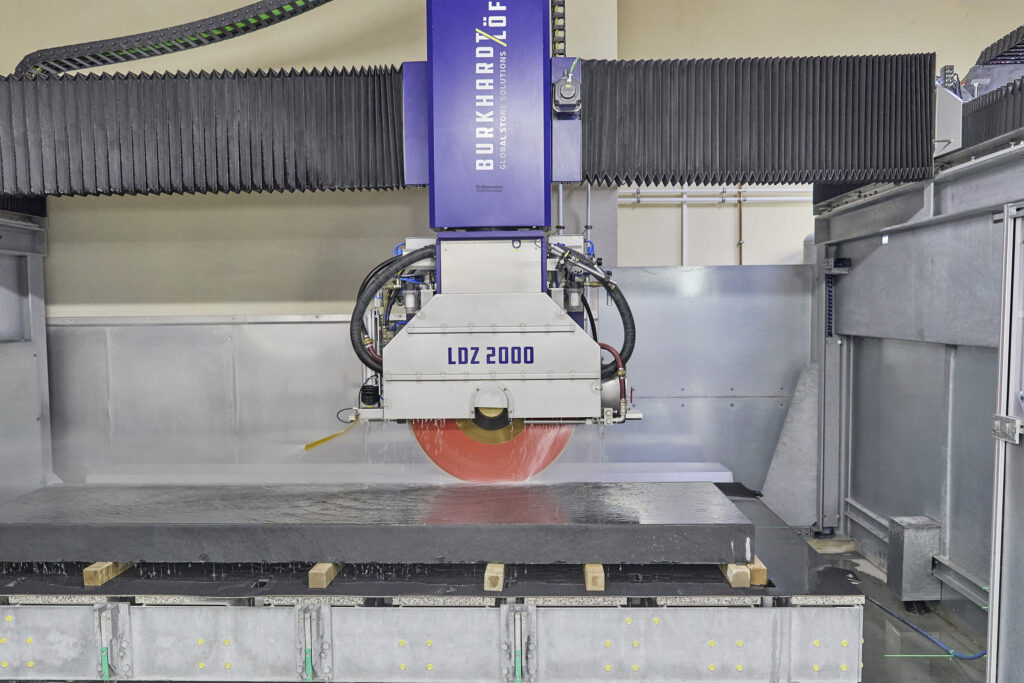
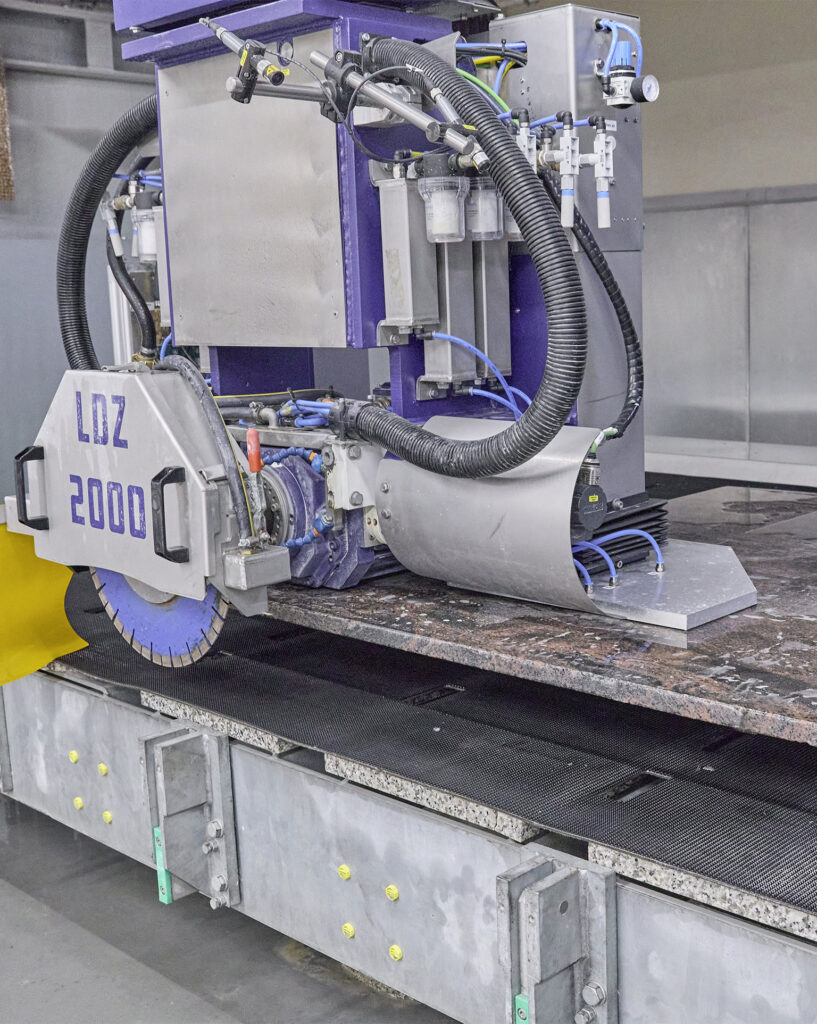
The LDZ 2000 is extensively equipped, including tool changing and digital raw plate detection.
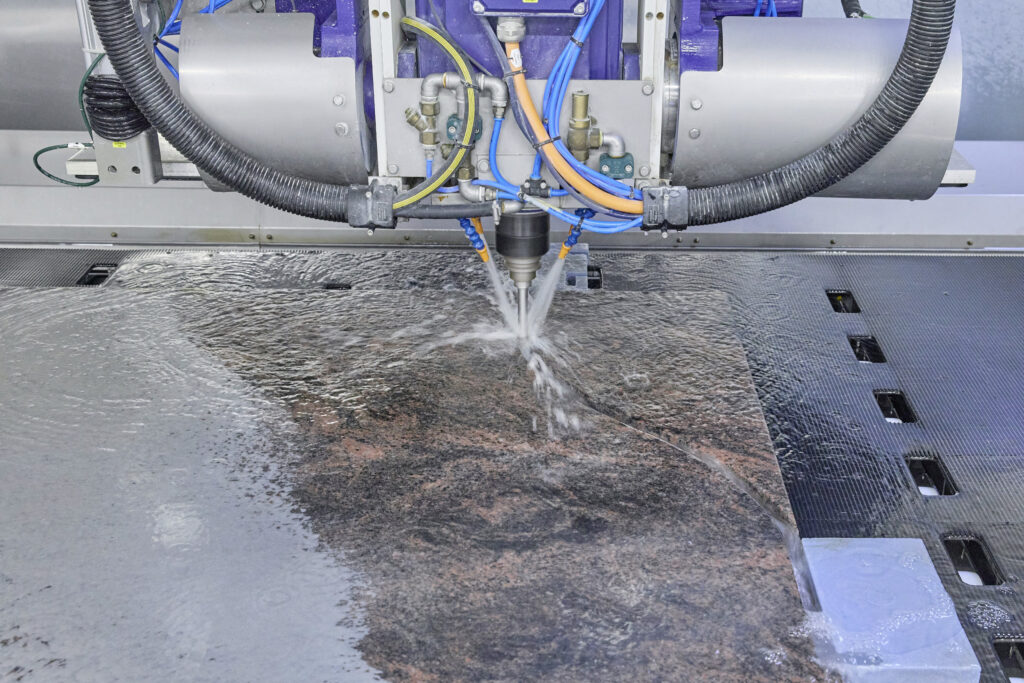
The saw becomes a milling machine – machining of a curved cover plate.

Overcoming External Obstacles

While working with powerful machines is now a great advantage, things were far more difficult for Karin Grobe’s parents. In the days of East Germany (GDR), success required not only diligence but also a great deal of ingenuity, especially when it came to obtaining materials. „Often, we only received small stone pieces. Large, high-quality stone blocks were primarily exported to the West. Material was allocated to businesses and was never sufficient,“ she recalls. Facing chronic shortages, Reiner Grobe turned necessity into an for gravestone production, and the company quickly invested in new machinery.

Thanks to vacuum separation, the saw saves valuable working time.
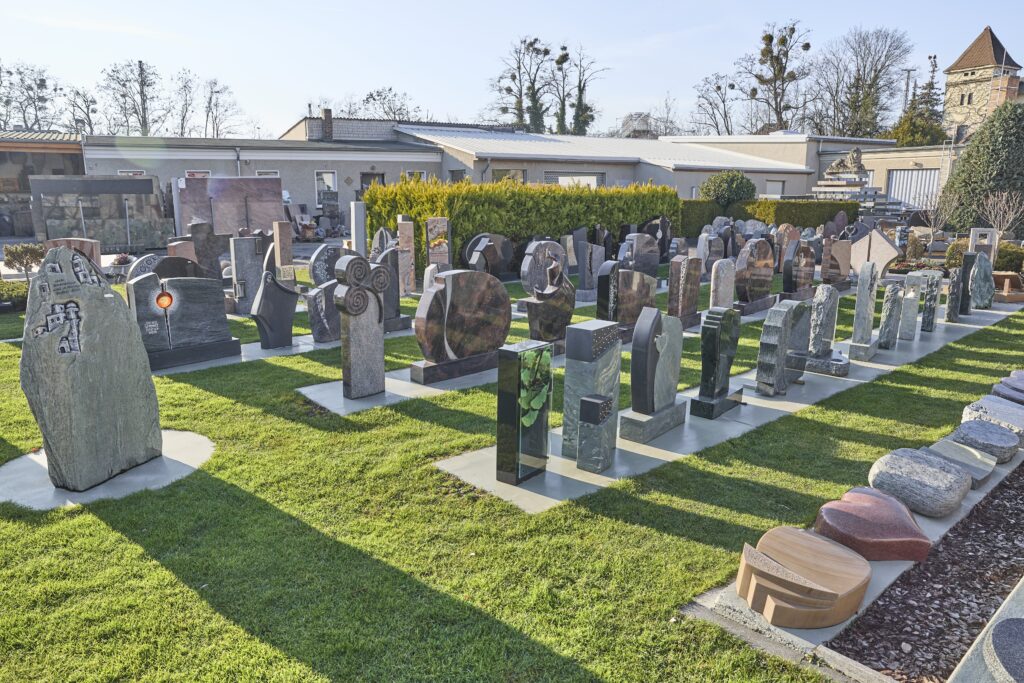
Hands-On Variety – The extensive exhibition showcases the full spectrum of shapes and materials.

Versatility Instead of Mass Production

Through her combination of passion for the craft, experience, and creativity, Karin Grobe successfully navigates the challenging social and economic environment. She has built a strong reputation among clients through dedication and personal commitment. Competing not on price but on quality, she holds her ground against imported gravestones from other European countries. She dedicates great care and attention to her showroom, where she presents innovative gravestone designs and unique materials. While catalog and online presentations may seem practical and cost-effective, they are less convincing in day-to-day consultations. Clients want to see the stones in person and feel the surface finishes
firsthand. To facilitate this, Grobe collaborates with granite suppliers such as Destag, Just, Böse, and J. Petasch. She carefully selects models that fit her own product range and showcases them on her company premises. Traditional
German stones are increasingly represented in her selection.Rochlitz porphyry, Beucha rhyolite, and other domestic materials are currently experiencing a renaissance, with many customers consciously opting for unique designs made from these stones. This demand reaffirms Karin Grobe’s belief that regional stones have a place in the market. She encourages fellow stonemasons to have more confidence in using German materials.

The surface grinding machine FSA 561 provides independence from material deliveries and offers many processing options.
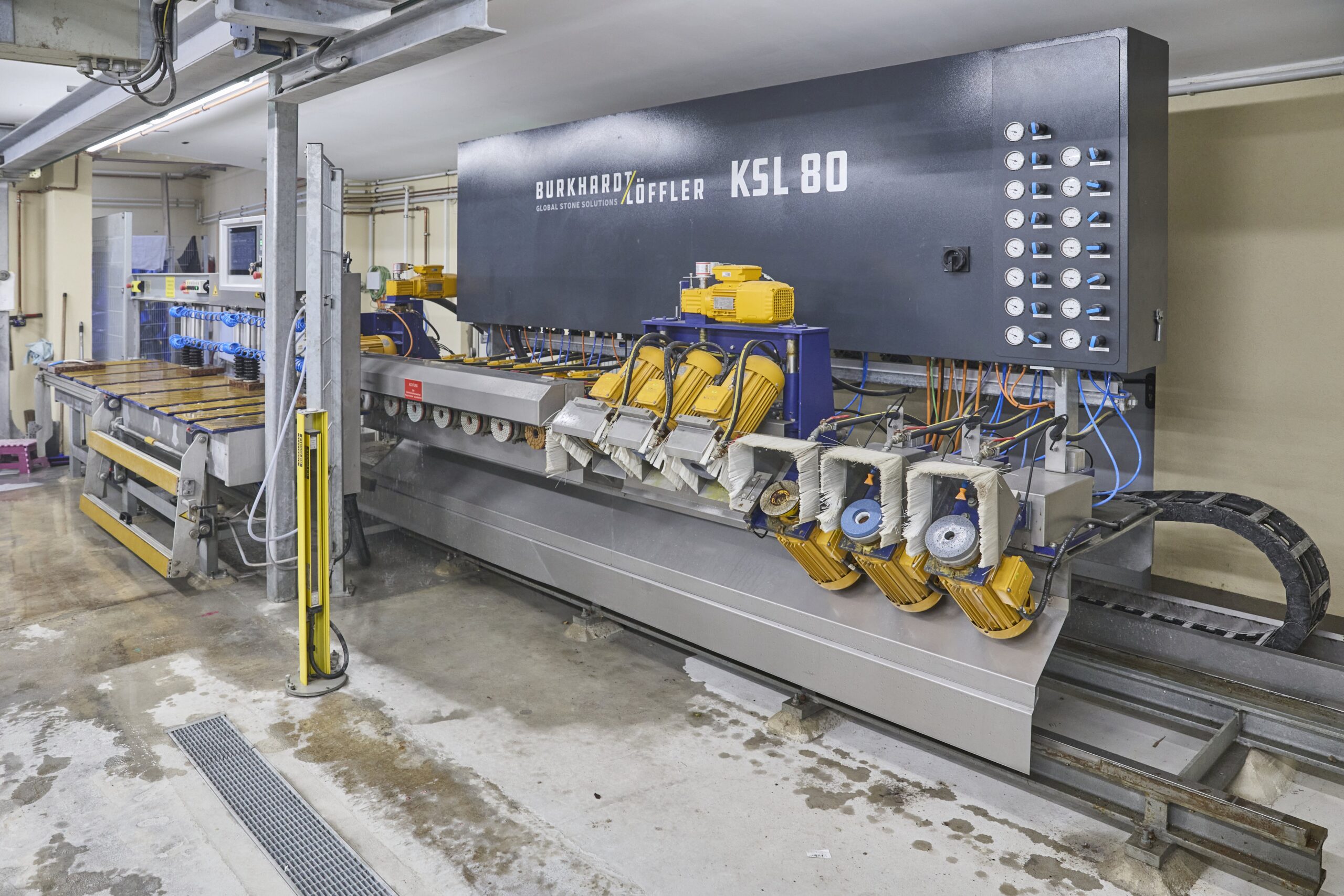
Like the other machines, the approximately 10-meter-long KSL 80 was precisely fitted into the hall.
Quality work down to the last detail – edge processing of urn plates.

Quick Information

YouTube

Mit dem Laden des Videos akzeptieren Sie die Datenschutzerklärung von YouTube.
Mehr erfahren

Video laden

LDZ 2000 

  • 5-axis CNC bridge saw with rotating and swiveling saw support
  • Siemens Sinumerik control with 19 inch panel
  • Remote diagnostics and maintenance
  • Galileo Master user interface for direct data input at the machine
  • Cutting depth 280 mm
  • Motor 18 kW, 1,000-3,000 rpm
  • Working area approx. 4 x 2 m
  • Automatic panel thickness measurement
  • Digital panel detection system
  • Vacuum manipulator
  • Automatic tool change, 20 positions in the magazine, 2 saw blade holders

KSL 80

  • Bench edge sanding machine for material thicknesses 10-80 mm
  • 8 face supports, 3 motor-adjustable top bevel supports, 3 bottom bevel supports
  • Bevel scanning device
  • Pneumatic clamping cylinder for even chamfers
  • Total machine length approx. 10 m
  • Grooving saw support, plunging from above or below

Richard Watzke M.A.

is a trained stone sculptor and art historian. As a freelance editor, he publishes articles on natural stone extraction, technology and application. He also specializes in photography, marketing and public relations work for stonemasons, associations and institutions.

Magazin Naturstein 03 | 2025

Fotos: Burkhardt-Löffler