According to a study by management consultants Horváth and Partners, nine out of ten decision-makers are convinced that robot-controlled process automation (RPA) would greatly benefit their company. There are also companies that manufacture in series in the stone processing industry; the expansion of the sector to include engineered stones and ceramics has ensured this. These companies with automated production lines are gradually developing towards Industry 4.0. As a result, machine development in the stone industry is also undergoing a strategic and technological upheaval.
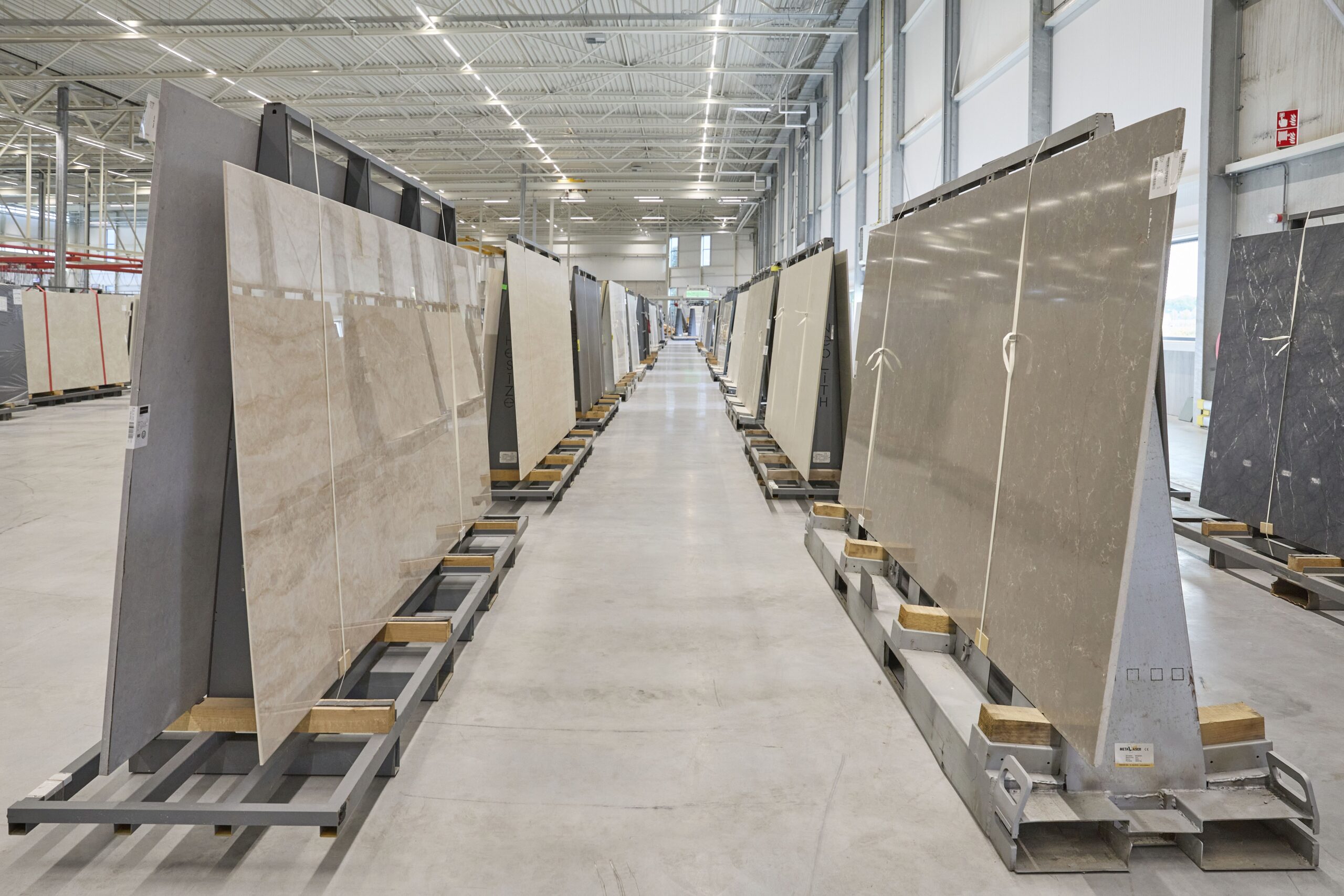
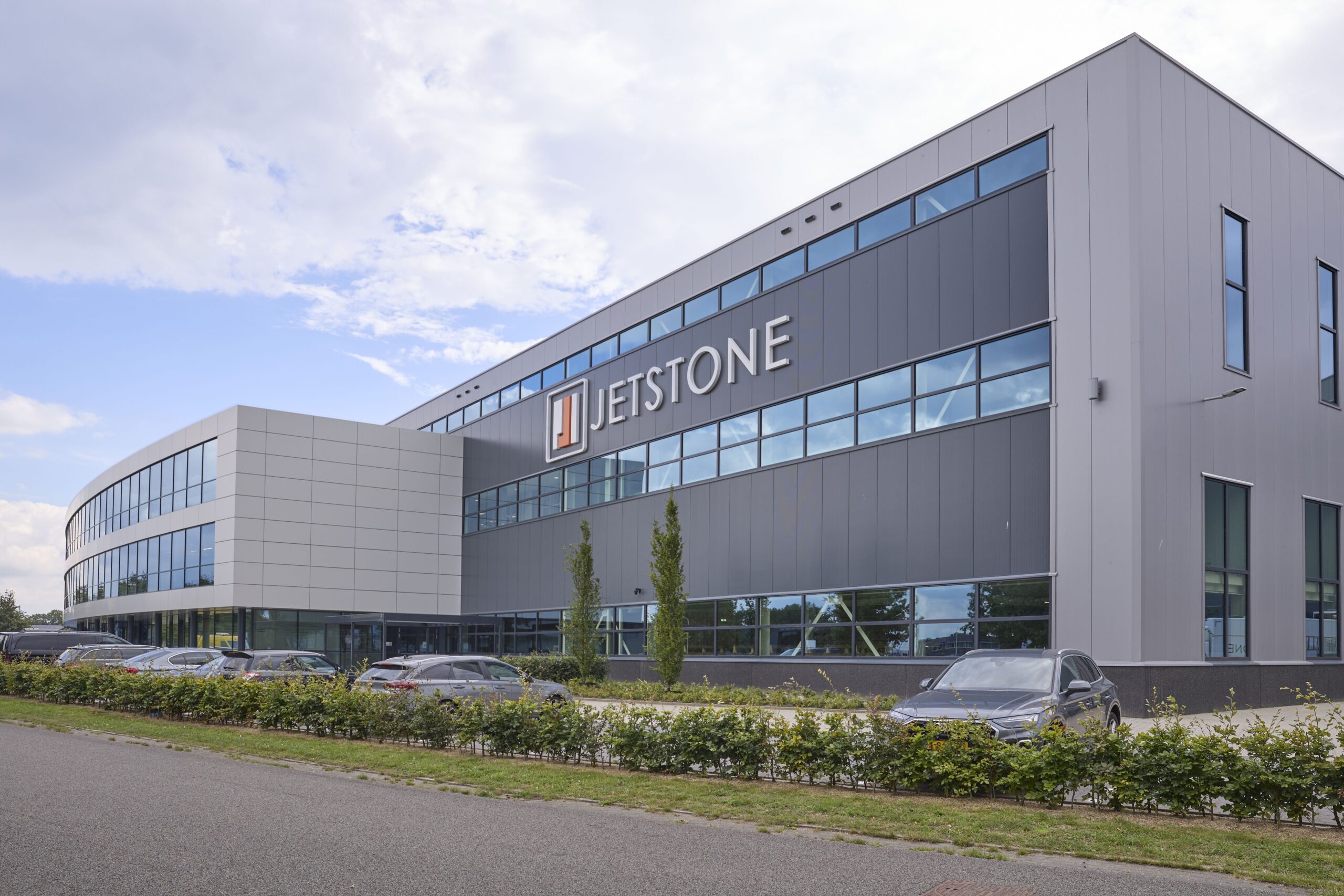
Since its founding in 1993, Jetstone has pursued the goal of offering high-quality kitchen countertops with the shortest possible lead times. Using modern technology, meticulous planning, and seamless logistics, this family-owned business has grown into one of the most efficient producers of kitchen countertops within three decades. The growth continues: in 2023, a new 16,000 m² facility housing production, administration, and a showroom was added to the existing factory halls in Deurne, Netherlands. This expansion brought the company’s total storage and production area to 34,000 m². Including sales and assembly personnel, 350 employees keep the finely tuned operations running, explains Production Manager Han Verberne. Delivery time is five days from measurement. Some orders are handled by in-house teams: if measurements are taken on a Monday, delivery and installation follow the next Monday. Jetstone exclusively supplies resellers such as kitchen studios and furniture retailers. While the primary market is the Netherlands, customers in Germany, Belgium, and Sweden also source countertops from Deurne. On average, 900 to 1,000 kitchen countertop commissions leave the factory each week.
Material distribution has remained relatively stable. Slightly over half of the production consists of mineral composite, followed by ceramic, with natural stone making up a single-digit percentage. Approximately 60% of the countertops produced in Deurne stay within the Netherlands. This high domestic demand is driven by Dutch buyers’ preference for hard countertops, explains the production manager. For example, while laminate countertops account for over 80% of the market in Germany, they make up only about 30% in the Netherlands – hard materials thus enjoy a market share four times higher than in Germany. The popularity of these materials is primarily attributed to their image, being considered particularly durable, low-maintenance, and practical. Purchase motivations vary: some buyers prioritize longer lifespan, keeping a kitchen for up to 25 years, while others consider durability less important, with many Dutch consumers replacing their countertops after just ten years.
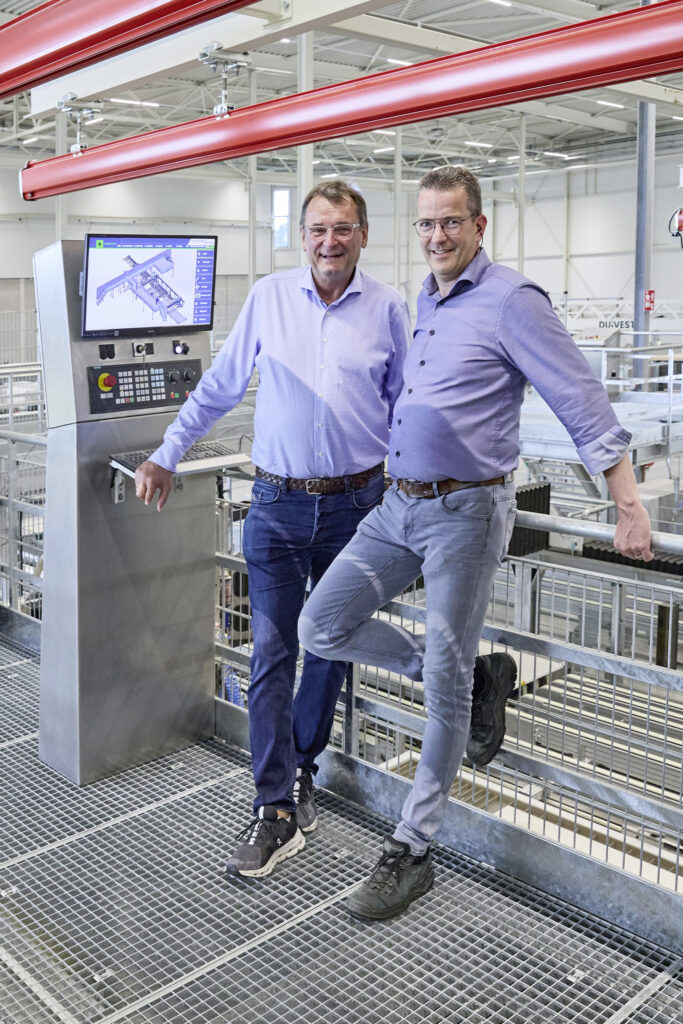
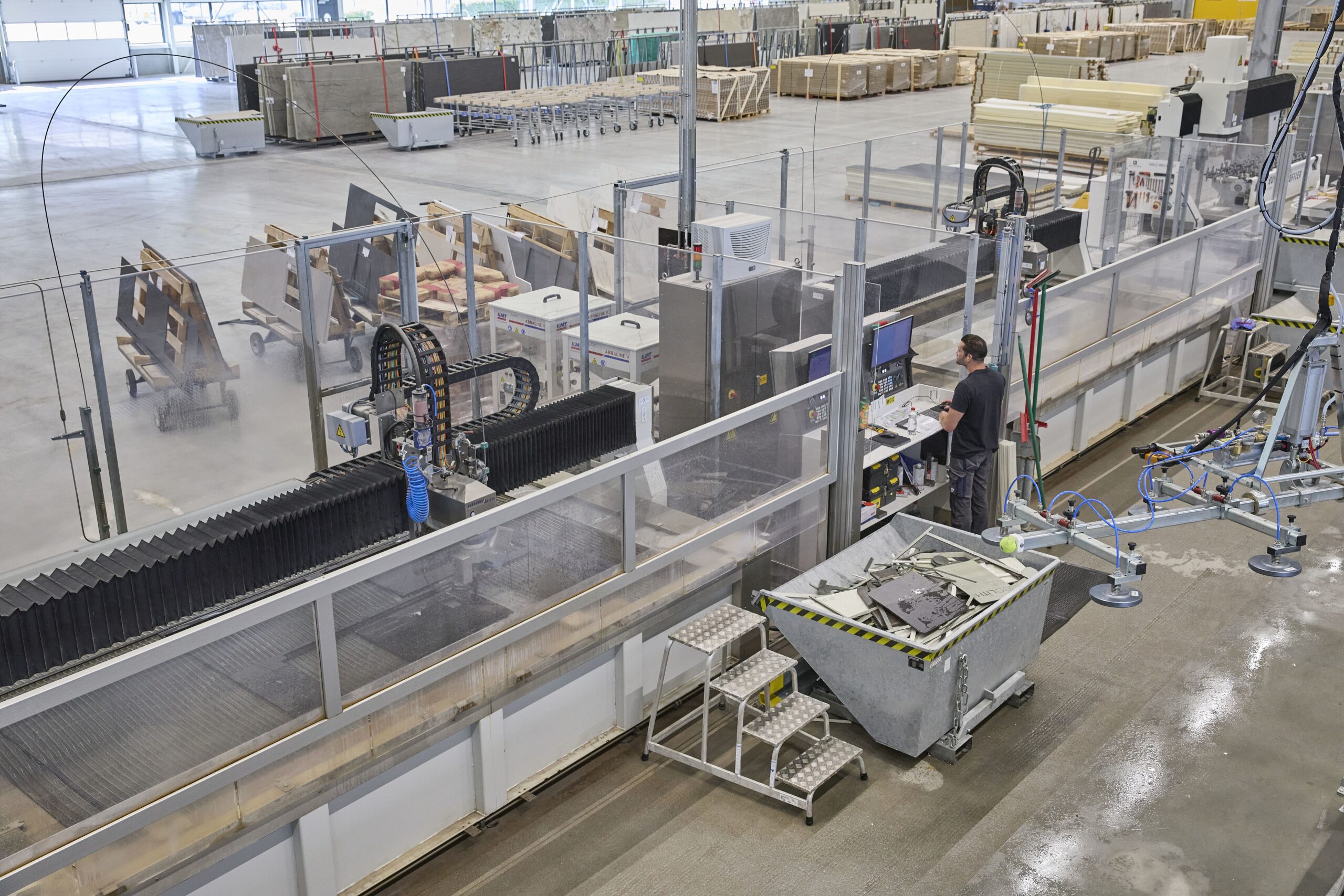
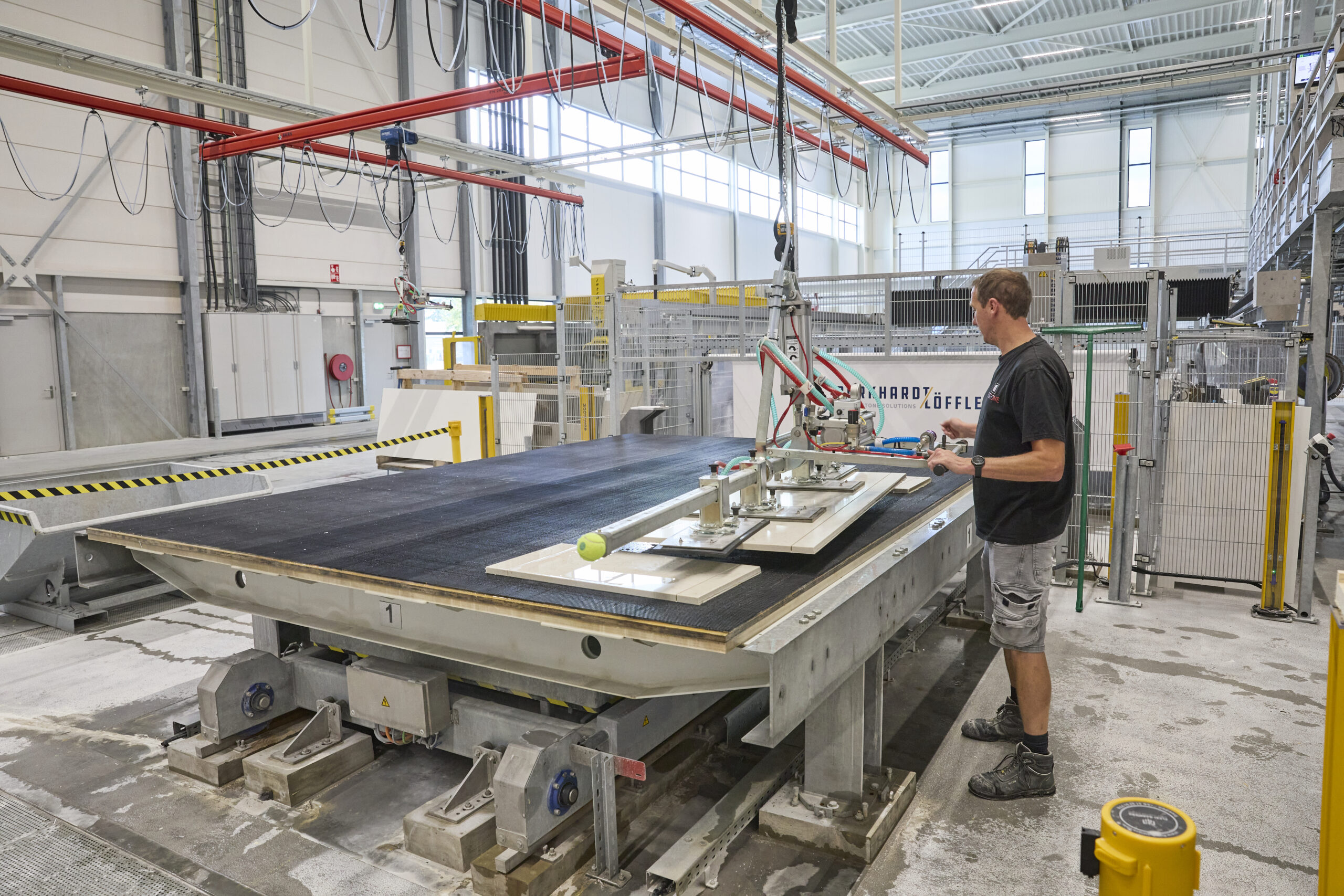
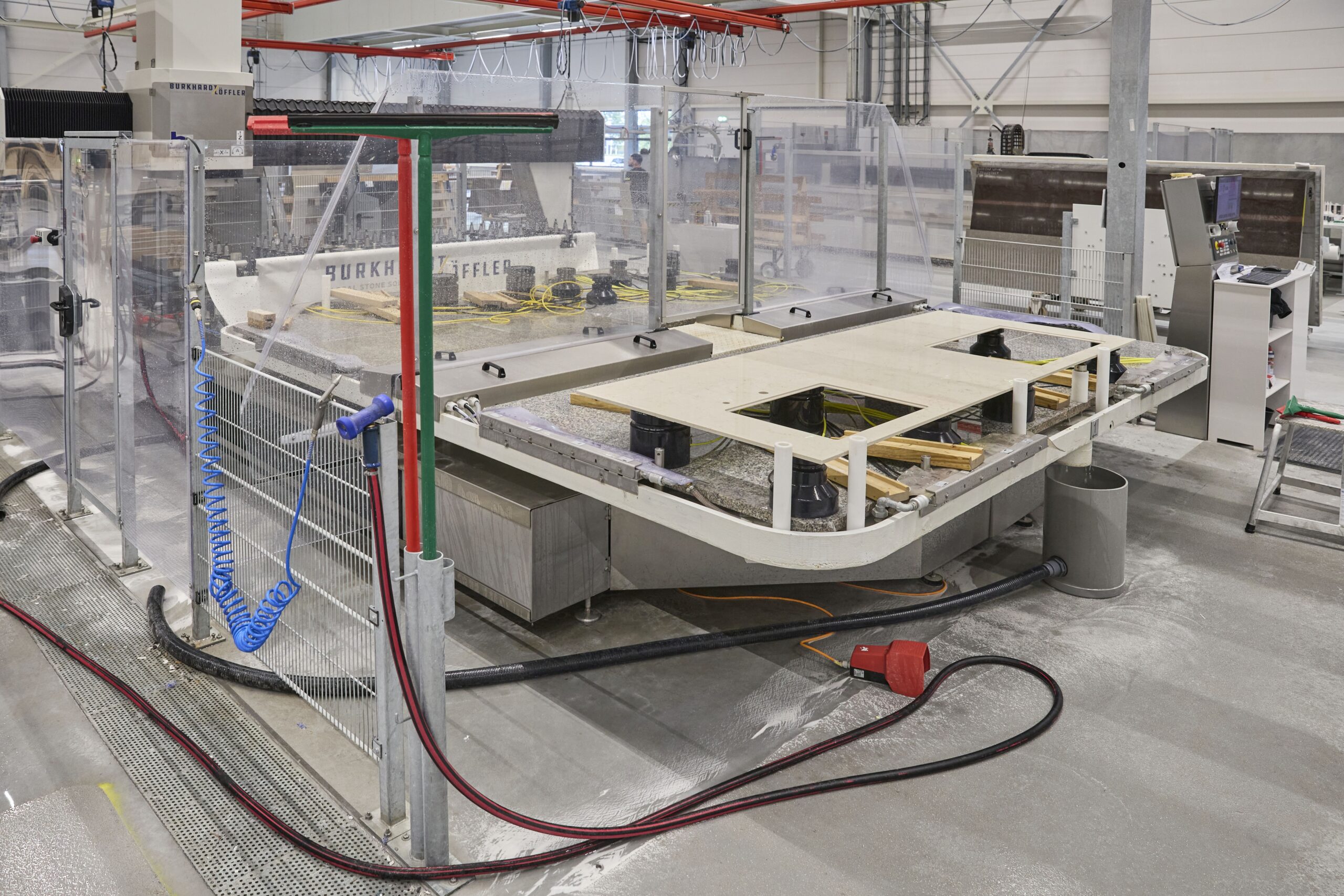
The construction crisis affecting many European countries is hardly felt in Jetstone’s expansive factory halls. On the contrary, order volumes have nearly returned to the peak levels seen during the pandemic, and the machinery is running at full capacity. The foundation of this high output is the extensive automation of all operational and production processes. Investments are made exclusively in the most advanced technology available on the market. Whenever possible, the company sticks to a single brand for new investments, particularly Burkhardt-Löffler, which supplies the numerous saws, waterjet cutting machines, and machining centers. Collaboration with Burkhardt-Löffler began in 2006 and has since driven many innovations in stone processing, such as a saw system with a conveyor belt that is still in use today. “The trusted partnership between machine suppliers and us as a customer is very important,” says Han Verberne. With 12 sawing centers—four of which combine waterjet and saw systems, and eight exclusively saw systems—nine waterjet machines, and nine rotary table machining centers from Burkhardt-Löffler, the relationship can truly be described as a close partnership.
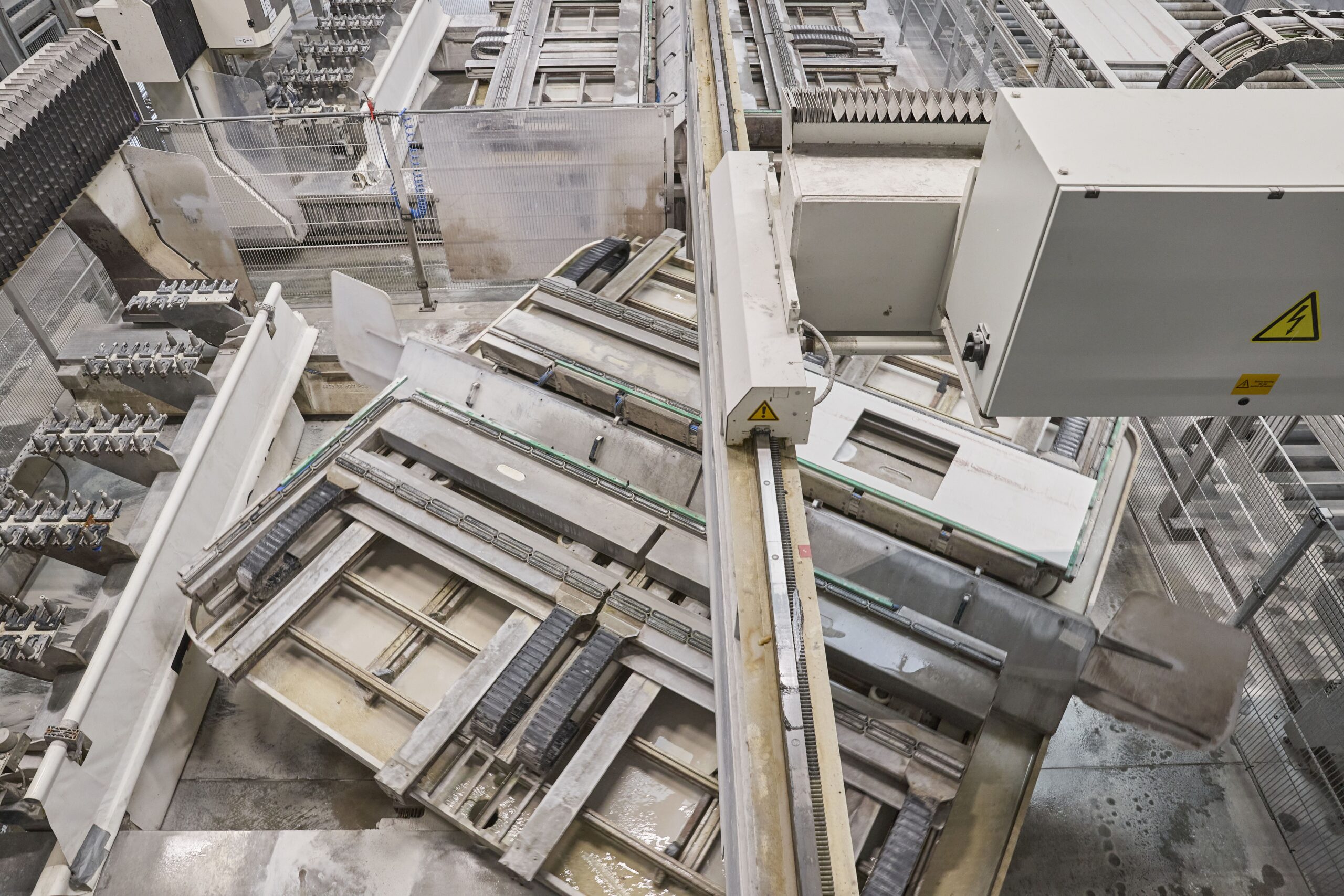
As beneficial as such a strong client is for a machine manufacturer, the collaboration is equally demanding, explains Burkhardt-Löffler CEO Steffen Langhans. Without Jetstone, the company would hardly have achieved this level of automation –many machines in the current program stem from joint developments arising from the direct exchange between Jetstone and Burkhardt-Löffler technicians. This applies not only to the bandsaws but also to rotary table systems and automatic suction positioning systems. While the production and commissioning of new machines are usually well-planned, the biggest challenge for any machine manufacturer is being able to respond promptly in case of service issues. When addressing malfunctions or breakdowns, Jetstone thinks in hours, not days – and the same is true for Burkhardt-Löffler. If necessary, essential components are shipped to Deurne overnight. Thanks to the modular component system, the machines are service-friendly, and individual modules are easily replaceable. Most service tasks are performed by Jetstone’s in-house technicians. The majority of required spare parts, including electric spindles, are readily available in stock in Deurne. With such a high degree of automation and seamlessly integrated processes from cutting to slab transport, even the smallest sensor must function perfectly. Since many machines share identical control technology, operators and technicians build a deep knowledge base from every service case, knowing exactly which critical points to check first in the event of a fault. This is another advantage of limiting the variety of brands used in production.
is a specialist journalist and industry expert. During the on-site visit, he was impressed by how the two partners – the user and the machine manufacturer – continuously seek new solutions and implement them together.